Pages

Friday, 14 February 2014

Who did invent Friday drinks?

This morning I came up with this question. Who was the genius introducing Friday drinks at work?! I did a bit of research online but, disappointingly it could not find anything on the subject.

You may wonder what is all this about, today? Don't take me wrong, I'm not waking up thinking about my afternoon drinks, but it's nice to have something to look forward to.....

And let me say that maybe not all companies take Friday drinks that seriously but the one I'm working for certainly does and that's why they may become the main reason to force yourself out of bed on a grey and wet Friday after a long week of late hours in the office and possibly even with an incoming flu, instead of working from home.

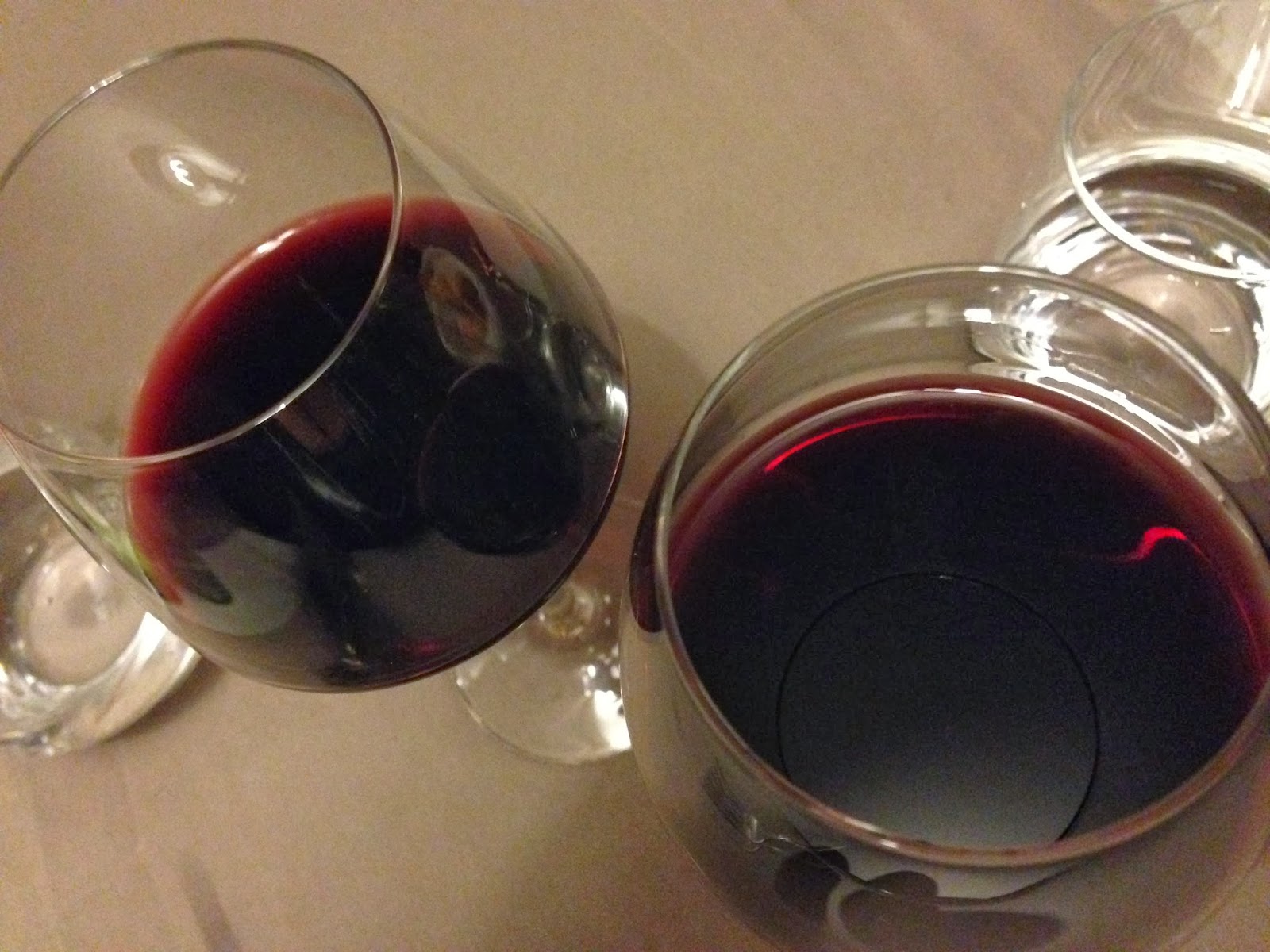
And this week I have been rewarded with a couple of interesting wines....


Surprise, surprise  (for anyone who knows my taste) I decided to go for the white, a single vineyard Pinot Grigi. Lively, fresh and with a reviving acidity. Quite citrusy and with a medium structure. Surely an unusual a captivating example of good quality (and not dull) Pinot Grigio.

Another week has gone...SALUTE!!

Sunday, 2 February 2014

Malbec vs Malbec

If Malbec was an human being, it would probably be considered as a bipolar personality. Otherwise, how else would you describe a grape that has different characters depending on the continent it's growing in?

Argentine Malbec reached the public's radar in the 80's-90's thanks to its charming character, juicy fruit and its plush, velvety texture. A type of wine difficult to dislike. It easily became fashionable, making Mendoza's fortune as a wine region.  And since then anyone been asked about Malbec would think about Argentina probably also because 70% of it is cultivated there.

But the truth is that the grape is actually originating from France, more precisely from the South West of the country and was introduced in Argentina only in the XIX century. Cahors, its home town, is a beautiful medieval city in the Lot region surrounded by vineyards but what is really interesting is that the wines produced here are quite different and much less fashionable from the South American ones, so well known by most consumers.

Much sturdier than its Argentinian brother, the 'black wine' of Cahors has generally a more difficult character, a rustic feel, less generous fruitiness, spiciness and harsher tannins that need a bit of ageing.

Not a great variety of Cahors Malbec make it to international market so, during my 2 weeks tour of South of France, I made a bit of research on my own. I was not looking  for any specific winery nor I was prepared for a very professional assessment. I just chose quite randomly from the supermarkets' shelves inspired by the label or by the price.

All the wines I have tasted were of surprisingly good quality and extremely fairly priced. I didn't find them that austere but they certainly had exuberant tannins and needed a bit of food (which of course was not missing) to express at their best.


I can reconfirm that these wines were extremely different in style from the Argentine Malbec (one of my favourites) I had when I came back home .
What I found interesting (and the reason that inspired me in writing this post) is the individual characters this grape can show and how the combination of soil, climate, human techniques (i.e. irrigation or not) and local traditions can produce such unusual wines from it.


I'd like to finish saying that I don't think there is a style that is better than the other, it is just a matter of taste. Always drink whatever you like!

Salute!

Sunday, 5 January 2014

Montiano

During the early stages of my 'wine life' the only wine I had available at home was that produced by my grandfather in Alto Lazio, the area where my family comes from, just at the border with Tuscany. With all respect to my grandfather (that has left us too early to see me working in the wine business - thing that, I am sure, would have made him very proud), his wine was really not memorable. Nor were those made by any of the local producers.

Even later, when my wine experiences had developed a bit, I still was having difficulties to find a remarkable wine from my region. I have to admit that being born in Lazio, a region of Italy where wine production has never reached extraordinary standards of quality and prestige, I was sure this was connected to the specific location. So I convinced myself that the soil and microclimate must have been not suitable for viticulture. 

A wine proved me wrong. And the wine I am talking about is the Falesco Montiano.


The very first time I had the chance to bump into it, it was at a vertical tasting I was attending as part of my sommelier course. It was almost a shock! I couldn't believe that a wine with this depth could be produced in Montefiascone, a town that I only knew for its white Est! Est!! Est!!!

The wine is a 100% Merlot and even if I am normally a supporter of indigenous varieties (check this link on the subject) I must say that the wine is so good I could easily get over the grape subject.

I have tasted various vintages since that first time and never been disappointed. The wine has plenty of ripe dark fruit and a gentle touch of sweet spices.

In the mouth it is round and strong with good tannins, much more that you could expect from a Merlot. It has both complexity and length. It is a very good wine.

It may not be the only good wine from Lazio but so far it's one of the few ones that makes me proud enough of my region's wines!